

What Kind of Home Tells a Child, “Your Work Matters?”

What Kind of Home Tells a Child, “Your Work Matters?”
On learning spaces, family culture, and creating a home that says: “Your ideas belong here.”
When I was pregnant with my first child more than fifteen years ago, I remember an older relative sharing what he clearly believed was one of the great secrets of successful parenting.
“Children should fit into your life, not the other way around.”
He offered it as wisdom earned over a lifetime of raising children. He was probably in his seventies by then, and I remember listening respectfully.
I disagree with it even more today than I did back then.
Becoming a mother didn’t simply add a child to the life I already had. It changed the shape of my life entirely. My son’s life became intertwined with mine in the most profound way, and together we began creating a life that worked for both of us. Over the years a few more siblings joined us, and our home continued to evolve around the people living inside it.
Looking back, I think that’s exactly what homes are meant to do. They’re not static. They’re living places that slowly begin to reflect what we value.
Recently, while working through the Learning & Making Spaces section of my 2026 By Design planning guide, I found myself thinking again about one of the most influential homeschooling books I’ve ever read: Project-Based Homeschooling by Lori McWilliam Pickert.
I first read it several years ago, but one idea has stayed with me ever since.
“Look at how your child’s space is arranged. Look at her materials. See how her work is displayed. Be sure that the environment is sending a clear message: Your work is important.“
I come back to that paragraph often because it reminds me of the kind of home I’m trying to create.
It also prompts a few uncomfortable questions.
Do my children have somewhere they can leave a project unfinished, knowing it will still be there tomorrow?
Is there a place where they can spread out, make a mess, experiment, change their minds, and return to it the next day?
Do we own more storage for toys than shelves for books?
And perhaps the hardest question of all:
Are the things we say we value actually visible in the way we live?
Family culture isn’t built through vision boards or beautifully written family mission statements. It’s built through hundreds of ordinary decisions repeated over time. How we spend our Saturdays. What stays on the kitchen table. What gets celebrated. What gets photographed. What gets interrupted. What gets protected.
As Annie Dillard famously wrote:
“How we spend our days is, of course, how we spend our lives.”
Children are naturally curious. We don’t have to manufacture that curiosity. Our job is simply to create spaces where it has room to grow. Sometimes that’s as simple as leaving a basket of good art supplies within reach. A shelf filled with books. A magnifying glass on the windowsill. Clean recyclables waiting to become inventions.
Lori writes:
“Family culture is the manifestation of your priorities, not what you say, not what you wish were true, but what you actually do on a daily basis.”
I’ve also come to wonder whether “I’m bored” sometimes means:
“I’ve run out of opportunities to be curious.”
We often assume children need more stimulation, but I’m not convinced they do. I think they need more freedom, more interesting materials, more time, and more trust.
We’ve also become strangely uncomfortable with unfinished work. We like tidy homes, completed projects, and quick results. Children don’t work like that. Their projects sit half-built for weeks, questions remain unanswered, and interests deepen slowly over time. Sometimes the most important learning looks like a child lying on the couch staring out of the window, apparently doing nothing at all.
Lori calls this “dreamy time.”
I love that phrase because every artist knows ideas need room to breathe before they become something tangible.
Children deserve that same spaciousness.
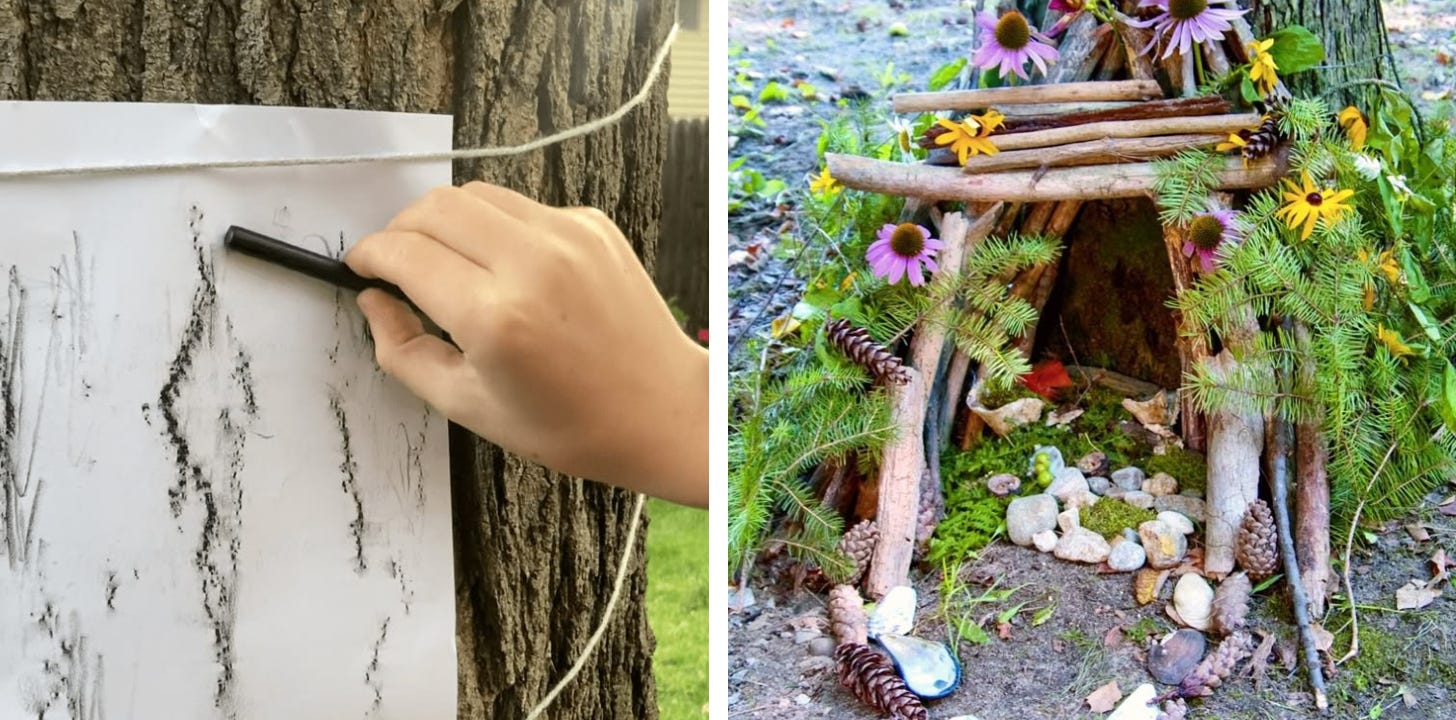
When I look around our house now, I see traces of it everywhere. Books piled beside beds. Shells collected from beach walks. Drawings taped to cupboard doors. An impressive collection of sticks and rocks collected from everywhere we go.
Years ago I might have seen mess. Now I mostly see evidence of a childhood being fully lived.
A Learning Spaces Exercise
This reflection comes from my 2026 By Design planning guide.
Take a slow walk through your home. Try to see it through your child’s eyes.
Ask yourself:
- Where does my child naturally create?
- Where can unfinished projects stay without being packed away?
- What materials invite exploration?
- What books are within easy reach?
- How do we display finished work?
- Is there somewhere that says ‘your work matters’?


About the Author
Hi, I’m Chris, a mother of four living on the South Coast of South Africa.
I write about motherhood, Aware Parenting, nervous system healing, creativity, and the messy, beautiful work of becoming more ourselves.
I’m passionate about helping mothers reconnect with their inner wisdom and build lives that feel slower, softer, and more aligned.
Before you go…
If something in this article resonated, here are three ways we can continue the conversation.
☕ 1. Book a Free Cup of Tea Call
Sometimes it helps to simply talk things through.
If you’re navigating motherhood, parenting, business, or a season of change, I’d love to invite you to a free 20-minute Cup of Tea Call.
It’s a relaxed, no-pressure Zoom conversation where you can bring whatever’s on your heart. Together we’ll explore where you are, what’s feeling most important right now, and what your next step might be.
There’s no obligation to work together afterwards. Think of it as two women sitting down with a cup of tea to see if I might be the right person to walk alongside you for a while.
Book your free Cup of Tea Call here.
🌱 2. 1:1 Mentoring
If you’d like ongoing support, I offer private mentoring for women navigating the beautiful, messy realities of motherhood, parenting, business, and becoming.
Each mentoring journey is tailored to you. Whether you’re looking for practical guidance, emotional support, business clarity, or simply someone to help you untangle a season of life, we’ll create a space that meets you where you are.
Most women begin with a free Cup of Tea Call, and if it feels like the right fit, we can explore working together from there.
Learn more about mentoring here.
🖥️ 3. Soul-Aligned Branding & Website Design
If you’re building a thoughtful, heart-led business, I also design custom WordPress websites, develop brand messaging, and help women create an online presence that feels deeply aligned with who they are.
I believe your website should feel less like marketing and more like an invitation, a place that reflects your values and welcomes the people you’re here to serve.
Explore my web design services here.
💌 If this post resonated, I’d love to hear from you. Leave a comment below or share it with someone who might enjoy reading it too.


You Might Also Enjoy...
